


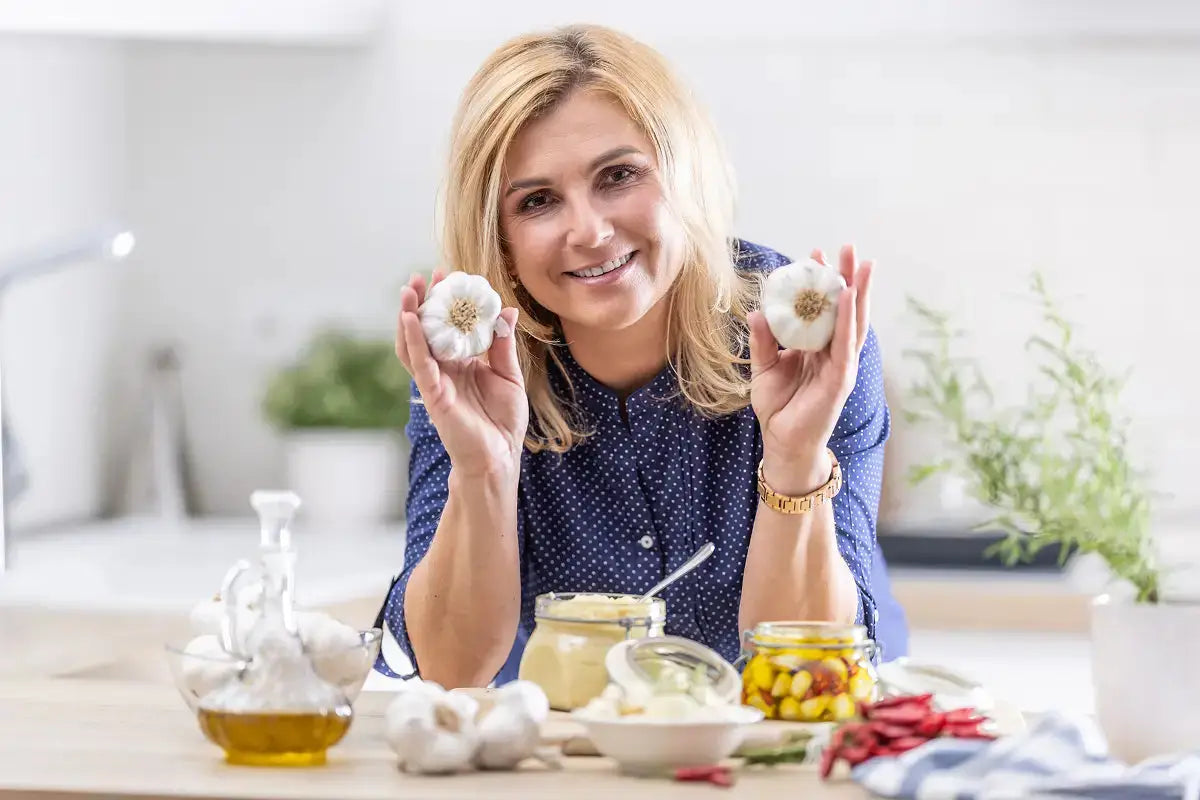
A lot of people have spent more time than they’d like to admit debating this question over dinner. Is garlic a herb? Strictly speaking, not exactly. Botanically, garlic is a bulb, a member of the Allium family, a cousin to onions and leeks. But around the table, that neat distinction rarely settles anything. The cooks roll their eyes. The herbalists lean in and say, “Does it matter? It’s used like a herb, valued like a herb, and has held that place for thousands of years.”
Here at Secrets of the Tribe, we tend to side with the herbalists. Not because we ignore science—far from it—but because we’ve learned that the most useful knowledge often lives at the intersection of tradition and research. Garlic sits exactly at that crossroads.
So let’s get the botanical answer out of the way, then spend our time where it counts: exploring why this pungent bulb has been prized by every culture it touched, and why it continues to hold such an enduring place in herbal tradition and everyday life.

History and Origin
If you had to trace garlic’s family tree, you’d end up in Central Asia—probably somewhere around the mountains of Kyrgyzstan or Tajikistan. That’s where wild garlic still grows, and where humans first looked at that cluster of papery cloves and thought, There’s something in this.
From there, garlic walked the Silk Road. It showed up in Egyptian tombs, tucked beside pharaohs for the afterlife. When workers building the Great Pyramid of Giza went on strike—yes, history’s first recorded labor dispute—they demanded more garlic. Not gold. Not better housing. Garlic.
Hippocrates, the guy who basically invented Western medicine, wrote long lists of garlic uses. He prescribed it for infections, for digestive complaints, for respiratory troubles. Roman legionaries ate it before marching into battle, convinced it made them fearless.
Over in China, garlic was warming and pungent—ideal for moving what Traditional Chinese Medicine called “stagnant qi.” In India, Ayurvedic practitioners considered it a powerful rajasic herb, heating and strengthening, but not for everyone. They knew it was potent.
What’s striking is how consistent the story is. From Egypt to Rome, from Persia to the Andes, people who never met each other all came to the same conclusion: garlic is a herbal treasure.
Garlic Benefits
Modern science doesn’t replace that wisdom. It gives us language for it. The compound that’s been getting the most attention is allicin—the stuff that hits your nose when you crush a fresh clove. It’s volatile, it’s sulfurous, and it’s the reason garlic does what it does.
Let’s walk through six ways garlic has been used across cultures, and what we’re learning about them today.
Immunity
If you grow up in a Mediterranean household, you know the drill: at the first sign of a sniffle, someone starts mincing garlic and mixing it with olive oil and lemon. Maybe honey, if you’re lucky. It’s not a pleasant shot, but you drink it because that’s what your grandmother did, and her grandmother before her.
In Japan and Korea, black garlic—fermented whole bulbs—is a pantry staple, valued for keeping the body resilient through changing seasons. As you can see, people all over the world cherish garlic as one of the best supplements for immune function.
You can easily embrace its benefits by taking it in tinctures or herbal blends, such as Urgent Immune Boost Capsules.

Healthy Blood Pressure Already Within Normal Range
Traditional European herbalists called garlic “the poor man’s heart tonic.” They meant it affectionately. If you couldn’t afford exotic spices or complex preparations, you could still hang a braid of garlic in your kitchen and crush a clove into your evening stew.
The logic was simple: it seemed to nourish cardiovascular health. Garlic is one of the best nitric oxide supplements, the compound known for helping maintain healthy vascular tonus.
According to a 2019 review and meta-analysis, garlic may nurture blood vessels and help maintain healthy blood pressure already within normal range.
Healthy Cholesterol Level
Walk through any traditional market in Southern Europe or North Africa, and you’ll still hear old‑timers say that garlic “cleans the blood.” It’s one of those phrases that sounds poetic until you realize they were describing something real.
We now know that garlic can support lipid balance. A 2018 meta-analysis data shows that garlic may support healthy levels of cholesterol and LDL—the kind that tends to accumulate in arteries—while leaving HDL (the “good” one) relatively untouched.
Antioxidant Support
We talk about antioxidants like they’re a modern discovery, but preserving food with garlic is ancient practice. Salt and garlic were the two great protectors in pre‑refrigeration times.
The science now says garlic is loaded with compounds that may support cellular health in the presence of free radicals.

Longevity
There’s a village in southern Italy called Acciaroli. You might have heard of it. A huge number of residents live past 100, and when researchers came to study their habits, they found one thing in almost every kitchen: garlic. Not supplements. Not special preparations. Just garlic, used daily, the way their families had for centuries.
Now, no single food explains longevity. But the pattern keeps showing up. The Mediterranean diet, the Okinawan diet, the traditional Korean diet—they all feature garlic prominently. It’s one of those quiet constants that never makes headlines but never disappears either.
Detox
In the language of herbalism, “detox” means something different than the internet version. It’s not about juice cleanses or deprivation. It’s about supporting the body’s built‑in elimination pathways—the liver, the kidneys, the skin—so they can do their work efficiently.
Garlic has long been used for that. In Eastern European folk medicine, people ate raw garlic on an empty stomach in the spring, to “wake up” the body after winter. In Ayurveda, it was part of cleansing protocols for certain body types.
What we’ve learned is that the sulfur compounds in garlic may help maintain liver function. It’s a perfect example of tradition pointing the way, and science confirming the mechanism.

FAQ About Garlic
Questions we’ve heard over the years—some practical, some quirky, all worth asking.
Q. If I cook garlic, do I lose the benefits?
A. Heat does reduce allicin content. But here’s a trick: after chopping or crushing garlic, let it sit for 10–15 minutes before cooking. That gives the allicin time to form, and once formed, it’s more stable under heat. You still get plenty of benefit from cooked garlic—it’s just different.
Q. What’s the difference between fresh garlic, aged garlic extract, and black garlic?
A. Fresh garlic is what you buy at the market—potent and versatile. Aged garlic extract is made by fermenting garlic for months, which mellows the flavor, reduces odor, and concentrates certain compounds (like S‑allylcysteine). Black garlic is fresh garlic aged under controlled heat and humidity for weeks; it turns sweet and sticky, with a distinct set of antioxidant properties.
Q. Why does garlic make my breath smell so much?
A. Blame the sulfur compounds. They’re the same molecules behind many of garlic’s benefits. To reduce breath odor, try chewing fresh parsley, mint, or a few coffee beans. Some people swear by eating a raw apple after garlic—the natural enzymes seem to help neutralize the smell.
Q. Can I eat garlic every day?
A. Many people do, across the Mediterranean, the Middle East, and Asia. One to two fresh cloves per day is a common traditional range. If you’re new to daily garlic, start small and see how your digestion responds. If you opt for supplements, follow the label directions.
Q. Is black garlic better than fresh?
A. “Better” depends on what you’re looking for. Black garlic is milder, sweeter, and contains different antioxidant profiles. It’s wonderful for people who find raw garlic too harsh. Fresh garlic is more potent in allicin. Both have their place.
Q. Does garlic become “weaker” over time?
A. Yes. Fresh garlic begins to degrade after a few weeks. Store it in a cool, dry place with good airflow—never in the refrigerator, where it can sprout or rot. A traditional garlic keeper (a ceramic pot with holes) works beautifully.
Glossary
Allicin
The sulfur compound formed when garlic is crushed; responsible for much of garlic’s distinctive smell and many of its biological effects.
Aged garlic extract
Garlic fermented over months to create a stable, odor‑reduced supplement rich in compounds like S‑allylcysteine.
Black garlic
Fresh garlic aged under controlled heat and humidity until the cloves turn black, soft, and sweet; popular in Korean cuisine.
Sulfur compounds
A family of molecules in garlic and other alliums that contribute to both aroma and health‑supporting properties. |
LDL cholesterol
Low‑density lipoprotein—often called “bad” cholesterol; high levels are associated with cardiovascular concerns.
HDL cholesterol
High‑density lipoprotein—“good” cholesterol; helps remove excess cholesterol from the bloodstream.
Conclusion
So what is garlic? A vegetable? A spice? A herb? A medicine? It’s all of those things, and none of them quite capture what garlic is.
Maybe that’s the point. Garlic belongs to that category of plants that refuse to be neatly labeled. They just show up, day after day, doing what they’ve always done. Supporting. Warming. Keeping us company at the table.
At Secrets of the Tribe, we’re drawn to that kind of knowledge—the kind that doesn’t need a fancy title to show its worth. Garlic has been a secret of the tribe for thousands of years. The fact that modern science is now telling us why doesn’t make the secret any less powerful. It just gives us more reasons to keep passing it on.
So next time you crush a clove, think about the trail it traveled to get to your kitchen. From Central Asian mountains to Egyptian tombs to your cutting board—that’s a journey worth honoring.
Share:
How Long Does Ashwagandha Take to Work? A Story of Roots, Rhythm, and Resilience
Organic Ginger: Tradition, Tea, and Everyday Support